
Tinnitus: What That Ringing in Your Ears Could Mean
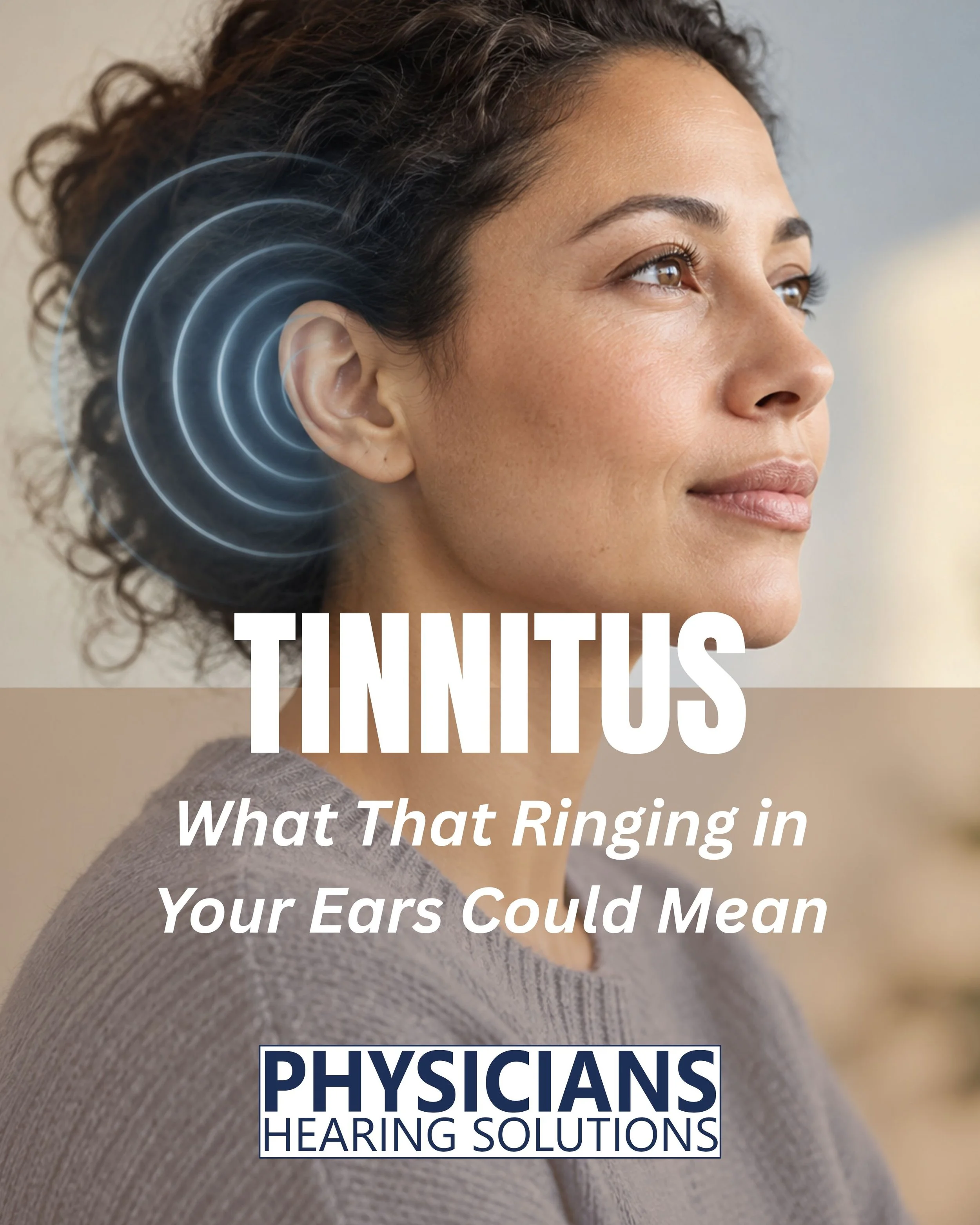
Have you ever noticed ringing, buzzing, humming, or another sound that no one else can hear? This experience is known as tinnitus.
Tinnitus is the perception of sound without an outside source. It may occur in one or both ears, feel as though it is coming from inside the head, and be constant or come and go. Although ringing is the most familiar description, tinnitus can also sound like buzzing, hissing, clicking, roaring, or swishing.
Tinnitus is common and is rarely a sign of a serious medical condition. However, persistent symptoms can be distracting and may interfere with sleep, concentration, communication, and overall quality of life.
What Causes Tinnitus?
Tinnitus is not usually a condition by itself. Instead, it is often associated with a change or underlying problem somewhere in the hearing system.
Possible causes include:
Exposure to loud music, machinery, firearms, or other intense sounds
Age-related hearing changes
Noise-induced hearing loss
Excess earwax or an ear infection
Certain medications
Head or neck injuries
Temporomandibular joint, or TMJ, problems
Ménière’s disease and other inner-ear conditions
Blood vessel conditions, particularly when the sound follows the rhythm of the heartbeat
In rare cases, tinnitus in one ear may be associated with a vestibular schwannoma, also called an acoustic neuroma. This is a usually noncancerous tumor that develops on a nerve connecting the inner ear to the brain.
Sometimes, no specific cause can be identified.
When Is Tinnitus Temporary?
Temporary tinnitus can occur after attending a concert, using loud power equipment, or being exposed to another intense sound. It may fade after several minutes or hours.
Even when the ringing disappears, it can be a sign that the ears were exposed to potentially damaging noise. Wearing properly fitted hearing protection and lowering the volume of personal listening devices can help reduce the risk of future hearing damage.
Repeated episodes should not be ignored, especially if they are accompanied by difficulty hearing.
When Should You See an ENT?
Schedule an evaluation if tinnitus:
Does not go away
Frequently returns
Occurs mainly in one ear
Is accompanied by hearing loss, dizziness, ear pressure, or balance problems
Pulses or beats in time with your heartbeat
Interferes with sleep, concentration, work, or daily activities
Begins after starting a new medication
Seek prompt medical care if tinnitus develops suddenly with new hearing loss, severe dizziness, facial weakness, or other neurological symptoms.
How Is Tinnitus Evaluated?
An otolaryngologist, also known as an ear, nose, and throat physician or ENT, will ask when the tinnitus began, what it sounds like, whether it affects one or both ears, and whether additional symptoms are present.
The evaluation may include:
An examination of the ears, head, and neck
A review of medications and recent noise exposure
A hearing evaluation
Additional balance or imaging tests when appropriate
This process can help identify treatable conditions such as impacted earwax, infection, hearing loss, or jaw-related problems.
Can Tinnitus Be Treated?
There is no single treatment that works for every person. When an underlying cause is found, treating that condition may reduce or resolve the tinnitus.
For persistent tinnitus, management options may include:
Hearing aids for people with hearing loss
Sound therapy or gentle background noise
Cognitive behavioral therapy or tinnitus-focused counseling
Tinnitus retraining therapy
Strategies for improving sleep and reducing stress
Treatment for associated jaw problems or other medical conditions
There is currently no medication specifically approved to cure tinnitus, and supplements marketed as tinnitus remedies have not been proven effective. Always speak with a healthcare professional before beginning a supplement or stopping a prescription medication.