
New to Hearing Aids? Tips for a Successful Adjustment
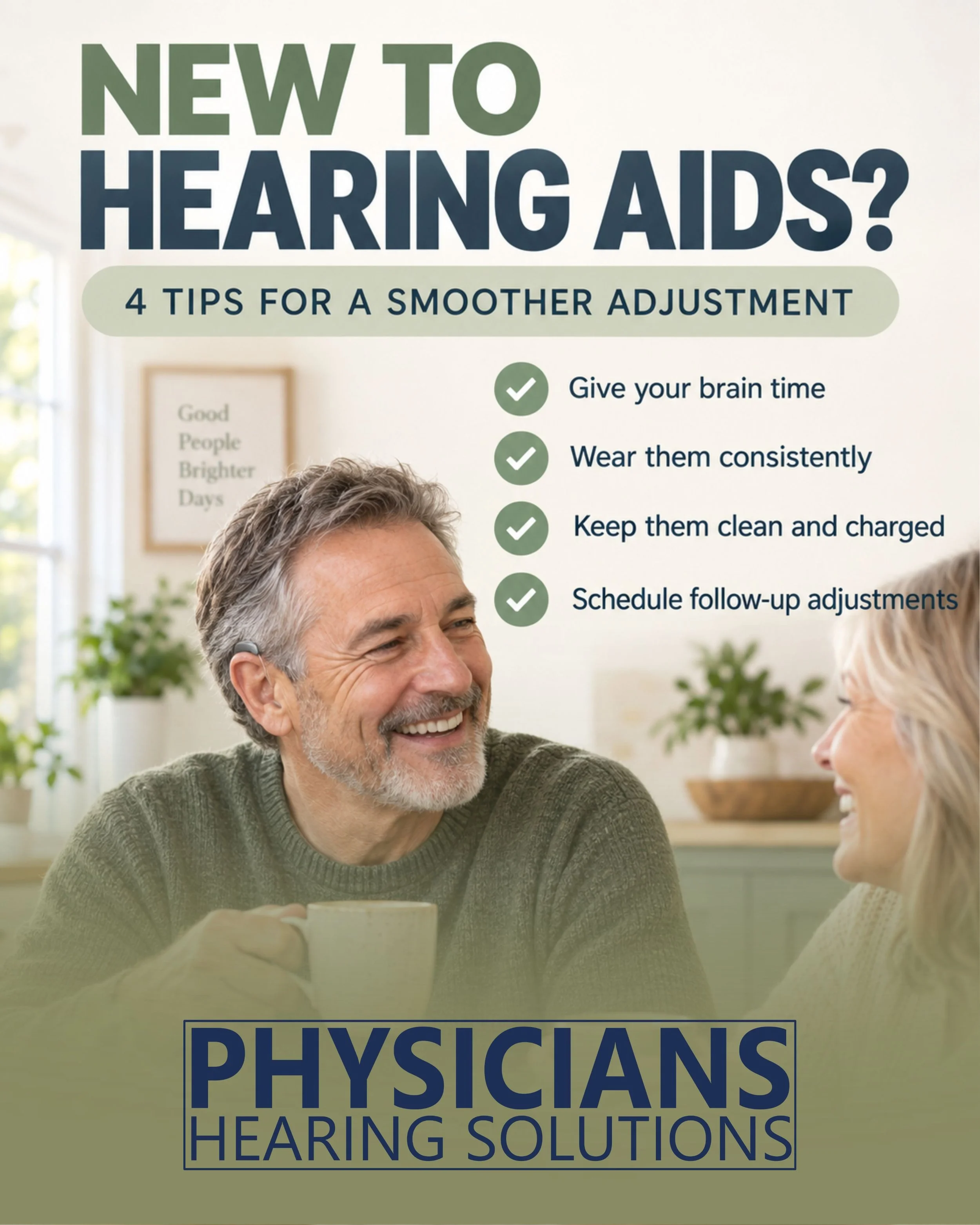
Acknowledging hearing loss and taking steps to address it can make a meaningful difference in your daily life. Hearing affects much more than your ability to detect sound. It plays an important role in communication, relationships, independence, safety, and overall quality of life.
Research has also found associations between hearing loss and concerns such as social isolation, depression, and cognitive decline in older adults. These connections are complex, and hearing loss does not necessarily cause these conditions. Still, having your hearing evaluated and appropriately treated is an important part of caring for your overall well-being.
If you are a new hearing aid user, it is normal to need time, practice, and professional support as you adjust. The team at Physicians Hearing Solutions is here to help you feel comfortable with your devices and get the greatest possible benefit from them.
Set Realistic Expectations
Hearing aids are not quite like a new pair of glasses. While glasses often make vision feel clearer immediately, hearing aids introduce your brain to sounds that may have been difficult to hear for months or even years. Your brain needs time to become familiar with those sounds again.
Hearing aids can improve access to speech and environmental sounds, but they do not restore hearing to normal. Their success also depends on an accurate hearing evaluation, appropriate device selection, careful programming, and follow-up adjustments based on your individual hearing loss and daily needs.
Some people adjust quickly, while others need more time. Try not to compare your experience with someone else’s. Consistent use, patience, and communication with your hearing healthcare provider are important parts of the process.
Expect Some Sounds to Seem Unfamiliar
Because hearing loss often develops gradually, you may not realize how many everyday sounds have become softer or disappeared altogether. When you begin wearing hearing aids, sounds such as running water, rustling paper, footsteps, turn signals, dishes, or your own voice may suddenly seem louder or different.
This does not automatically mean something is wrong with your hearing aids. Your brain may simply be readjusting to sounds it has not processed clearly in a long time. Regular wear during your waking hours, following the schedule recommended by your hearing healthcare provider, can help these sounds begin to feel more natural.
If sounds are painfully loud, your hearing aids whistle frequently, the devices feel uncomfortable, or speech remains difficult to understand, contact your provider. A professional adjustment may improve your comfort and listening experience.
Wear Your Hearing Aids Consistently
It may be tempting to wear hearing aids only for conversations, restaurants, or special occasions. However, regular use gives your brain more opportunities to adapt to the full range of everyday sounds.
Begin in manageable listening environments and gradually practice in more challenging places. Wear your hearing aids at home, during one-on-one conversations, while watching television, and eventually in busier environments. Even when you are alone, everyday sounds can help you become more comfortable with amplification.
Remove your hearing aids before showering, swimming, or using hair products unless the manufacturer specifically states otherwise.
Earwax Can Affect Hearing Aid Performance
Earwax is one of the most common reasons a hearing aid may sound weak, muffled, distorted, or stop working. Wax can block a dome, earmold, tubing, receiver, or wax guard. Moisture and debris can also interfere with performance.
Clean your hearing aids according to the instructions provided for your specific devices. Your hearing healthcare provider can show you how to inspect the openings, replace wax guards when appropriate, and use the correct cleaning tools.
Earwax inside the ear canal can also affect hearing and hearing aid performance. Do not insert cotton swabs, hairpins, or other objects into the ear canal, and do not attempt to remove deeply impacted wax yourself. Contact a qualified healthcare professional for safe evaluation and removal.
Check the Power Source
If a hearing aid suddenly stops working, the battery or charge level is one of the first things to check.
For hearing aids with disposable batteries:
Confirm that the battery is fresh and inserted correctly.
Keep batteries clean, dry, and stored at room temperature.
Turn the hearing aids off when they are not in use. Depending on the device, this may involve opening the battery door.
Keep hearing aid batteries away from children and pets because swallowing a button battery is a medical emergency.
For rechargeable hearing aids:
Place the devices in their charger each night or according to the manufacturer’s instructions.
Make sure the charging contacts and charger are clean and dry.
Confirm that the charger is connected to power and that its indicator lights show the devices are charging.
Always follow the care instructions for your specific hearing aid model rather than removing a sealed rechargeable battery.
Practice Helpful Communication Strategies
Hearing aids are valuable tools, but good communication habits can make listening even easier. Face the person speaking, reduce background noise when possible, and move closer to the conversation. Good lighting can also help because facial expressions and lip movements provide useful visual information.
If you miss part of a sentence, ask for specific clarification instead of simply saying, “What?” For example, you might say, “I heard that we are meeting tomorrow, but I missed the time.” This helps the speaker repeat only the information you need.
Your provider can also explain features such as directional microphones, smartphone connectivity, television accessories, and remote microphones that may help in challenging listening environments.
Keep Your Follow-Up Appointments
Your first fitting is the beginning of the process, not the end. Follow-up visits allow your provider to evaluate comfort, review your progress, make programming adjustments, and address questions about cleaning, batteries, charging, feedback, or background noise.
Keep notes about situations in which you hear well and situations that remain difficult. Specific examples can help your provider make more useful adjustments. Instead of saying that the hearing aids “do not sound right,” describe where you were, who was speaking, how much background noise was present, and what you had trouble hearing.
Hearing Care and Support in Rhode Island
Adjusting to hearing aids takes patience, but you do not have to navigate the process alone. Physicians Hearing Solutions provides personalized hearing care and ongoing support to patients throughout Rhode Island and the surrounding area.
Our experienced hearing healthcare professionals take the time to listen to your concerns, understand your communication needs, and help you feel confident using and caring for your hearing aids. Whether you need a hearing evaluation, a hearing aid adjustment, troubleshooting assistance, or guidance choosing the right technology, our goal is to help you communicate more comfortably and stay connected to the people and moments that matter.
If you are concerned about hearing loss or need help with your hearing aids, contact Physicians Hearing Solutions to schedule an appointment.
This article is intended for general educational purposes and is not a substitute for individualized medical advice, diagnosis, or treatment.