
Holiday travel tip: Pack a hearing kit before you go
Holiday travel is full of moments you do not want to miss: gate announcements, ride share calls, dinner conversations, and those quick family updates you only get once a year. If you wear hearing aids, a little planning can make the entire trip smoother.
A simple “hearing kit” packed in advance helps you stay confident on the road, avoid last minute stress, and handle small issues that can pop up while traveling. Below is a practical, no fuss guide to what to pack and why it matters.
Why a travel hearing kit matters
Hearing aids are reliable, but travel introduces variables you do not deal with every day:
Longer days and more listening effort in noisy places like airports and restaurants
More moisture exposure from rain, snow, hotel showers, and temperature changes
Higher risk of misplacing small items while rushing between locations
Less access to your usual supplies or support if something needs attention
The goal is not to overpack. It is to bring a few essentials that prevent small problems from turning into big disruptions.
The must have hearing kit checklist
1) Charger, charging cable, and power adapter
If your hearing aids are rechargeable, your charger is the single most important item. Pack it first.
Tips:
Bring the charger plus the cable and any wall adapter you normally use
Consider a backup cable if you have one
If you are traveling internationally, pack the correct plug adapter
If you are staying with family, chargers can get moved or unplugged easily. Keeping yours together in a small pouch helps.
2) Spare batteries (if you use disposable batteries)
If your hearing aids use traditional batteries, pack more than you think you will need. Holiday travel often means longer wear time, more streaming, and more hours in noisy environments, all of which can shorten battery life.
Tips:
Pack at least one full extra pack for short trips, more for longer travel
Keep them in a secure case so they do not spill in your bag
3) Wax guards and domes
Wax buildup is one of the most common reasons sound seems weaker or muffled, especially during a busy travel week when routines change.
Wax guards and domes are tiny but important. If you need them and do not have them, it can be hard to find the exact match away from home.
Tips:
Bring a few extra wax guards
Bring a few extra domes in your size and style
If you are not sure which ones you use, we can help you identify the right supplies before your trip
4) Drying case or dehumidifier
Weather, winter hats, temperature swings, and humid hotel bathrooms can expose hearing aids to moisture. A drying case helps protect your devices overnight and can reduce issues like intermittent sound or distortion.
Tips:
Use the drying case nightly while traveling
If you will be outside a lot, consider storing your hearing aids in the drying case when not in use
5) Cleaning brush and soft cloth
A quick daily clean prevents sound issues and keeps your hearing aids comfortable. Travel is a perfect time for crumbs, lint, makeup, and dust to sneak in.
Tips:
Give your hearing aids a quick check each night
Wipe down the outer shell and gently clean around microphone ports using the tools recommended for your device
Smart add ons that can make travel easier
Depending on your hearing aids and your travel plans, these extras can be helpful:
A small storage case so you have a safe place to put your hearing aids during security checks, naps, or quick wardrobe changes
Retention clips if you are worried about losing them in busy environments
A printout or note on your phone with your hearing aid model and clinic contact info
Any assistive listening accessories you use for TV, phone calls, or meetings
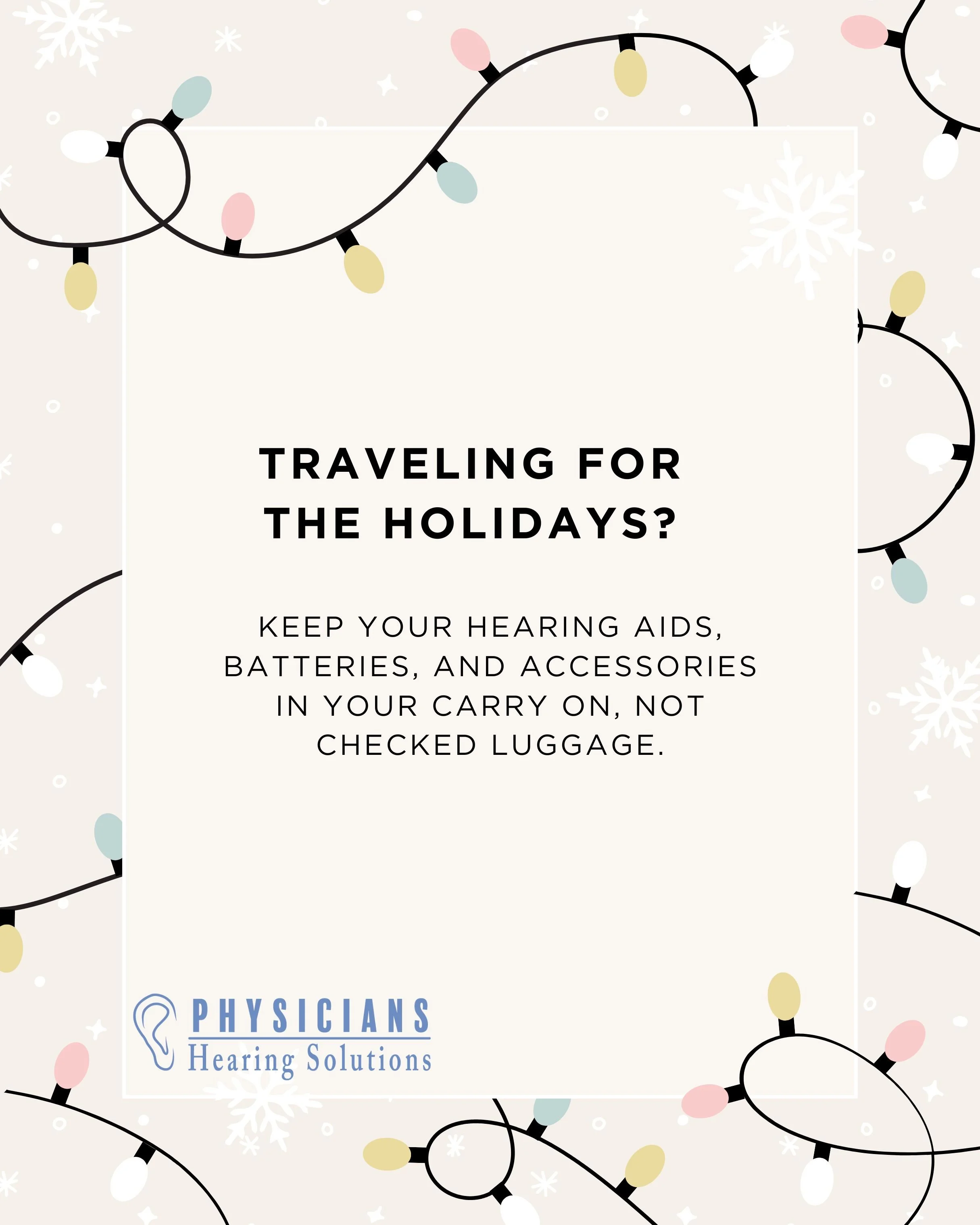
Keep your hearing kit in your carry on
This is one of the most important tips.
Always pack hearing aids, chargers, batteries, and supplies in your carry on, not checked luggage. Checked bags can be delayed, lost, or exposed to temperature extremes. Keeping your hearing items with you ensures you can hear and communicate even if travel plans change.
If you are flying, your hearing aids and supplies can go through security. If you have questions about screening, give yourself extra time and let security staff know you wear hearing devices.
Quick troubleshooting while you travel
If something sounds off, here are a few fast checks that solve many common issues:
Sound seems muffled: replace the wax guard and check the dome
No sound: confirm the device is powered on and check battery or charge level
Whistling or feedback: check that the dome is seated properly and not folded or loose
Intermittent sound: moisture can be a factor, use the drying case and keep devices away from humid areas
If you are unsure, do not guess. A quick call to the clinic can save time and frustration.
Consider a clean and check before your trip
If you are traveling for the holidays, scheduling a quick “clean and check” before you leave is a simple way to travel with confidence. We can:
Clean and inspect your devices
Replace worn parts like domes or wax guards if needed
Confirm your fit and comfort
Make small adjustments that help in noise or during family gatherings
Help you stock up on supplies
Need supplies? We’ve got you.
If you need wax guards, domes, batteries, a cleaning brush, or help putting together a travel kit, Physicians Hearing Solutions can help you get ready before you go.
Holiday travel is busy enough. Your hearing should not be the thing that adds stress.